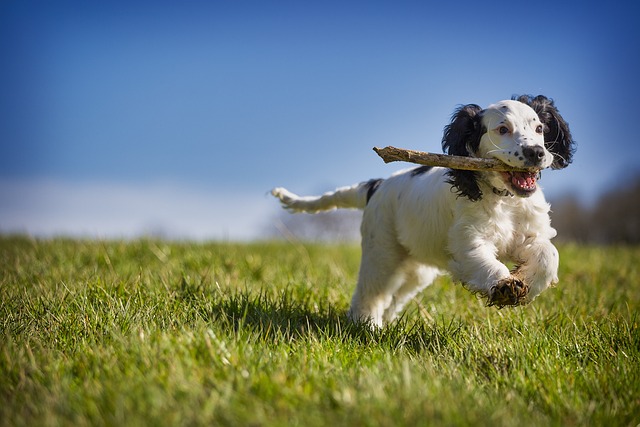
Fetch might look like second nature for every dog at the park — but if your pup stares at the ball like it’s a tax form, you’re not alone. Fetch isn’t an instinctive skill for all dogs, and that’s totally OK. With a little patience, encouragement and the right steps, your dog can learn to fetch just like the pros.
Here’s a complete, easy-to-follow guide to help you teach your dog to fetch.
Why Fetch Is Worth Teaching
Fetch isn’t just fun — it’s fantastic physical and mental exercise. It helps release stress, burns off extra energy and strengthens the bond between you and your dog. For high-energy or working breeds, it can even be essential to their daily routine. A good game of fetch keeps dogs happy, balanced and fulfilled.
How to Teach Your Dog to Fetch
There are two main approaches you can try. Every dog learns differently, so test both and stick with the one your dog responds to best.
Method 1: Backward Chaining
This method breaks fetch into small steps and teaches them in reverse order — starting with the last part of the behavior and working backward. It’s surprisingly effective for most dogs.
Step-by-step:
1. Teach your dog to open his mouth.
Use a treat to encourage your dog to open his mouth while pairing it with a cue like “open.” Repeat until he opens his mouth on cue alone.
2. Train the “take it” cue.
Give your dog an object he wants while saying “take it,” or say the cue whenever he naturally takes something. Practice until he understands the command.
3. Teach “drop it.”
Give your pup a toy he’s mildly interested in, then offer a high-value treat while saying “drop it.” With repetition, he’ll learn to release the toy without needing the treat.
4. Teach him to pick something up.
Place a low-value toy near him. Reward him for sniffing, touching or lifting it — and add the cue “pick it up” as soon as he starts lifting it off the ground.
5. Add chasing and picking it up.
Toss the object a short distance and reward him anytime he picks it up after the throw.
6. Teach “come.”
Reward your dog enthusiastically whenever he approaches you, pairing the action with the cue “come.”
7. Put all the pieces together.
Once your dog understands each step separately, string them together: chase → pick up → come → drop. Voilà — fetch!
Method 2: Tug & Reward
If backward chaining doesn’t click, try using your dog’s favorite tug toy instead.
How it works:
- Play tug for a few days — and always let your dog win.
- On the fourth day, toss the toy during play.
- If your dog naturally brings it back toward you, celebrate with praise and more tug.
- Repeat until your pup learns that returning the toy makes the game continue.
For many dogs, the desire to keep playing becomes the most powerful reward.
Troubleshooting Fetch Problems
If your dog knows the steps but still isn’t chasing or returning the toy, the issue might be motivation.
- Be energetic and upbeat.
- Use high-value rewards.
- Make the game exciting.
- Celebrate even small wins.
Remember: not every dog loves fetch, and that’s perfectly fine! Some prefer puzzle toys, long walks or scent games. If your dog just isn’t into fetch after a few weeks, try another activity he loves.
Extra Training Tips
- Give your dog a bit of exercise before training so he’s calmer.
- Keep sessions short — 2 to 5 minutes.
- Train with fun, not pressure.
- Reward generously (and unpredictably).
- Use body language first, then verbal cues.
- Say cues only once.
- Practice in different places.
- Gradually reduce treats over time.
Teaching fetch can be a rewarding bonding experience — just take it slow, keep it fun and let your dog enjoy the learning process. With patience and consistency, your pup can become a fetch pro in no time.
We independently pick all the products we recommend because we love them and think you will too. If you buy a product from a link on our site, we may earn a commission.